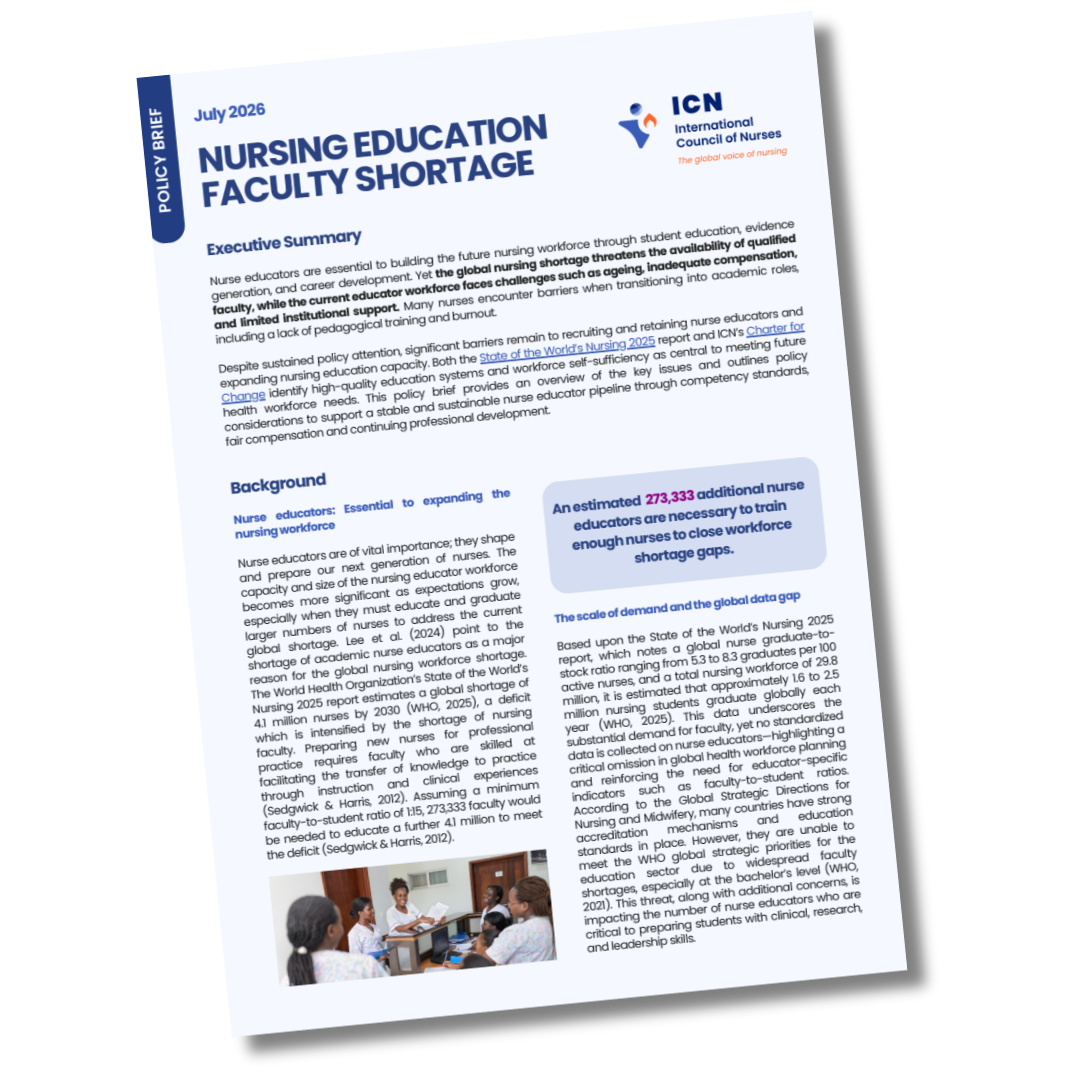
ICN: Investment in nurse educators is essential to recruiting and retaining the nursing workforce
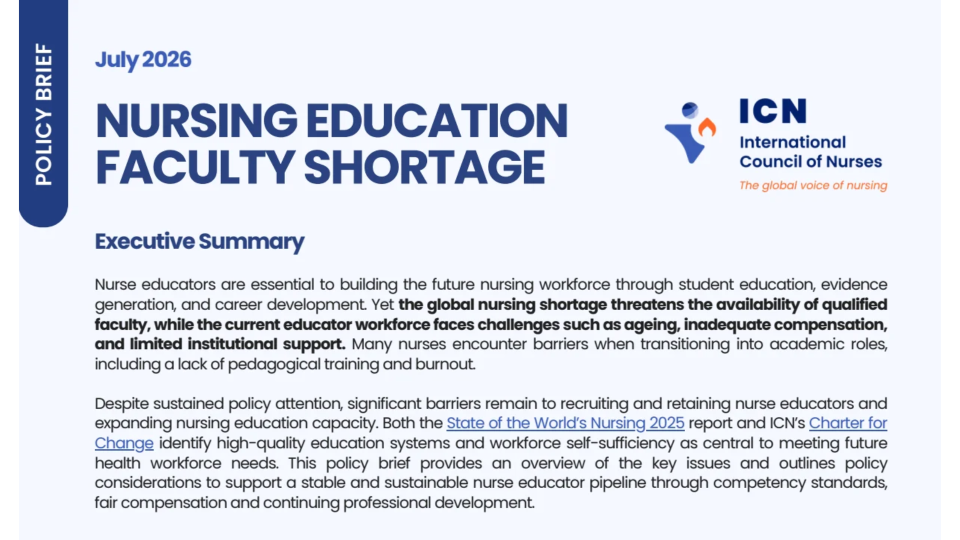
Investment in nurse educators is essential both to prepare new nurses and to help experienced nurses develop their skills and remain in the profession, the International Council of Nurses (ICN) says in its policy brief, Nursing Education Faculty Shortage.
With the World Health Organization projecting a global shortage of 4.1 million nurses by 2030, the brief warns that shortages of qualified educators threaten countries’ ability to build and sustain their nursing workforce. Inadequate pay, excessive workloads, an ageing faculty workforce and limited career support are undermining nursing education capacity.
The implications extend beyond educating new nurses. Educators also support lifelong learning, continuing professional development and post-registration qualifications, including preparation for specialist and advanced practice roles. These opportunities help nurses respond to changing health needs, progress in their careers and maintain rewarding professional lives.
ICN CEO Howard Catton said:
“Governments cannot promise more nurses without investing in the people who educate them. More student places mean little if we do not have the educators and clinical supervisors to turn that ambition into nurses delivering care.
“And this does not stop at graduation. Nurses need opportunities to learn, develop specialist skills and move into advanced practice throughout their careers. That is how we strengthen care and give nurses reasons to stay. Investment in nurse educators is investment in both recruitment and retention. It must be central to every nursing workforce plan.”
A shortage of qualified nurse educators threatens the ability of countries to develop a well-educated and sustainable nursing workforce, while expanding student numbers without appropriate supervision poses a risk to patient safety.
The brief identifies six priorities for action: including educators in workforce planning; improving pay and working conditions; safeguarding education quality; strengthening workforce data; using technology to support learning; and investing in educator expertise, leadership and career pathways.
It also highlights a significant gap in global workforce intelligence: the lack of consistent data on nurse educator numbers, vacancies, qualifications and retirement risks. Addressing this requires coordinated action by governments, universities and other education providers, regulators and international organizations. Institutions hold essential information, while national and international coordination is needed to establish comparable indicators and use the findings to guide investment.
Drawing on the work of ICN’s Education Experts Advisory Committee, the brief calls for a sustainable educator workforce that can support nurses throughout their careers. Expanding student places must be matched by investment in qualified faculty, clinical supervision and learning opportunities for the existing workforce.