

Pandemic Agreement talks resume: ICN urges UN health rights expert to act on delays
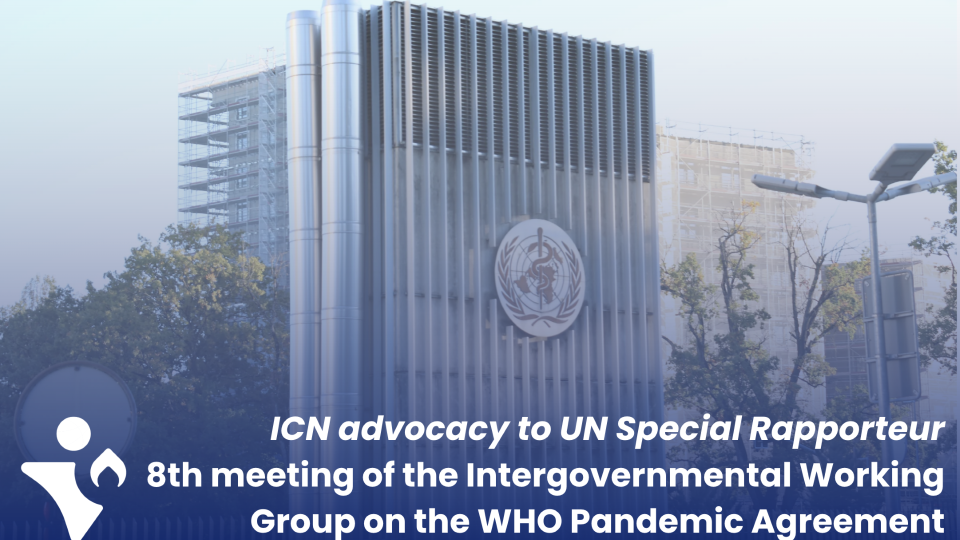
Ahead of the negotiations, ICN President José Luis Cobos Serrano and CEO Howard Catton urged the Special Rapporteur to examine the human rights implications of prolonged delays in operationalizing the Pandemic Agreement and to ensure that access to treatments, vaccines and diagnostics under the PABS Annex is fair and equitable.
ICN President José Luis Cobos Serrano said:
“The world said it had learned from COVID-19 and that nurses would never again have to risk their lives without the equipment, resources and protection they need to safely care for their communities in pandemics and health emergencies. But we are seeing continued and unacceptable delays in bringing the Pandemic Agreement into operation and agreeing on a fair and effective PABS Annex that gives health workers and populations equitable access to lifesaving treatment and protection.
In current Ebola outbreaks, nurses are once again dying and being put at grave risk, often without access to essential protective equipment. Dangerous pathogens are already testing health systems, and the next major crisis will not wait for negotiations to conclude. We know that viruses do not respect borders and that every day of delay leaves the entire world more vulnerable to the next health emergency.”
ICN has continually warned that the COVID-19 pandemic exposed a profound failure of global solidarity, particularly for frontline health workers in low- and middle-income countries. The Special Rapporteur letter set out data showing that in September 2021, only around 10% of health workers were fully vaccinated in several African countries, while much lower-risk populations in wealthier countries had access to vaccines.
ICN CEO Howard Catton said:
"No nurse or vulnerable person should ever again be left waiting for life-saving vaccines simply because of where they live. At least 115,000 health and care workers lost their lives during the last pandemic, while millions more experienced trauma, burnout, and long-term health impacts. Nurses in poorer countries watched lower-risk populations elsewhere receive full vaccination courses while they remained unprotected. We owe it to them to make sure that we do not repeat these moral failures and inequalities.
Countries must commit to fair and equitable sharing of vaccines, diagnostics, and protective equipment, which is the only way to protect global health equality and security. Nurses and populations need a functioning global framework that delivers equitable access. Leaders must use this round of negotiations to deliver it.”
ICN will provide input to the UN Special Rapporteur’s upcoming report to the Human Rights Council on “The Pathogen Access and Benefit-Sharing System, equitable access and the right to health in pandemic prevention, preparedness and response”, drawing on evidence and frontline testimony from its network of more than 140 National Nurses Associations.