

UK report reflects ICN warnings on international recruitment ripoff — now countries must act together
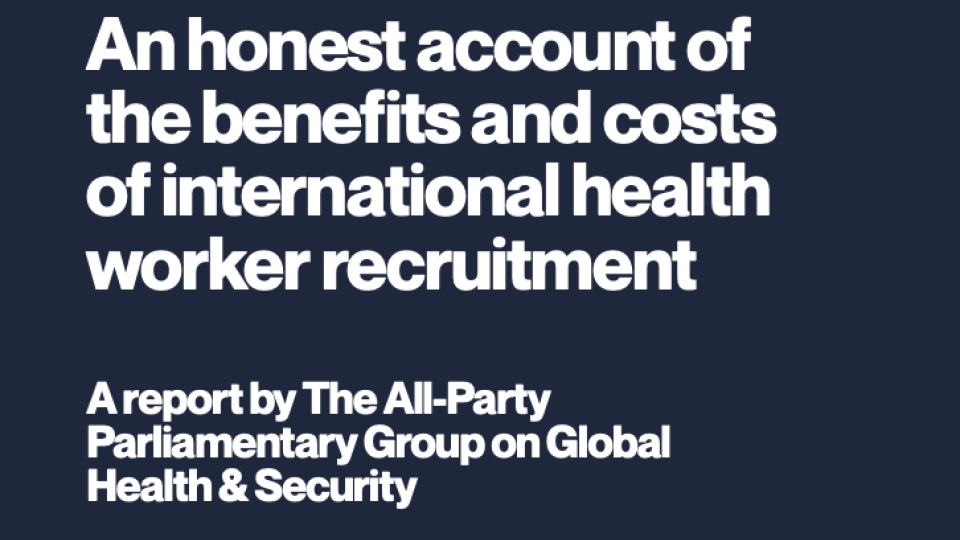
The International Council of Nurses (ICN) warmly welcomes a new report from the UK All‑Party Parliamentary Group (APPG) on Global Health and Security that recognizes the huge sums saved by high-income countries who recruit abroad and acknowledges the severe harms caused by unethical recruitment from fragile source countries left without nurses.
The report reflects key evidence submitted by ICN to the APPG inquiry, including firsthand testimony from countries losing their nurses.
ICN CEO Howard Catton said:
“We applaud the APPG’s leadership in confronting the scale and impact of international recruitment of nurses from low-income countries, which this report rightly recognizes as a major structural issue in the UK health system. The report’s finding that the UK has saved an estimated £14 billion in training costs by recruiting doctors, nurses and midwives from abroad puts a clear number on what ICN has long warned is a global nursing rip‑off: the benefits are banked by high‑income countries while the costs are borne by the countries that trained and employed these nurses.
We welcome the report’s clear calls for co-investment in the health systems of source countries. But this is not just a UK issue. This is a global problem that needs global solutions, and we call on recruiting countries to act together through joint commitments and shared reinvestment mechanisms.”
ICN participated directly in inquiry hearings, highlighting both the scale of financial benefits to destination countries and the long‑term damage to health systems that lose nurses through unmanaged and unethical recruitment.
The report quoted ICN’s warning that the loss of specialist nurses — often poorly captured in migration data — can be particularly damaging. Specialist nurses have undergone more extensive education and play critical roles in training, supervision and service delivery, and their loss can accelerate system collapse in already fragile settings. As a result, the true impact of international recruitment is likely to be even greater than headline figures suggest.
The report’s recommendations for measurable and enforceable co‑investment in health systems recruited from reflect ICN’s long-standing principle: if countries take from the global nursing workforce, they must also give back.
While the UK report marks an important step forward, ICN stresses that the challenge cannot be addressed by any one country alone. High-income countries’ reliance on international recruitment is a systemic issue worldwide. This means collective international leadership is needed.
With upcoming global forums including the G7, G20 and the World Health Assembly, ICN urges recruiting countries’ governments to commit to shared, collective solutions.
Mr Catton said:
“We need to translate the momentum of this UK report into global action. If high‑income recruiting countries came together and committed to aligned, ethical recruitment policies and shared mechanisms for co-investment, the impact would be huge. A global fund to reinvest in nurse education and workforces in fragile source countries would be a practical and powerful way to ensure recruitment strengthens health systems rather than depleting them.”
Find here the ICN briefing on the report
The full All-Party Parliamentary Group on Global Health & Security report is available here.